
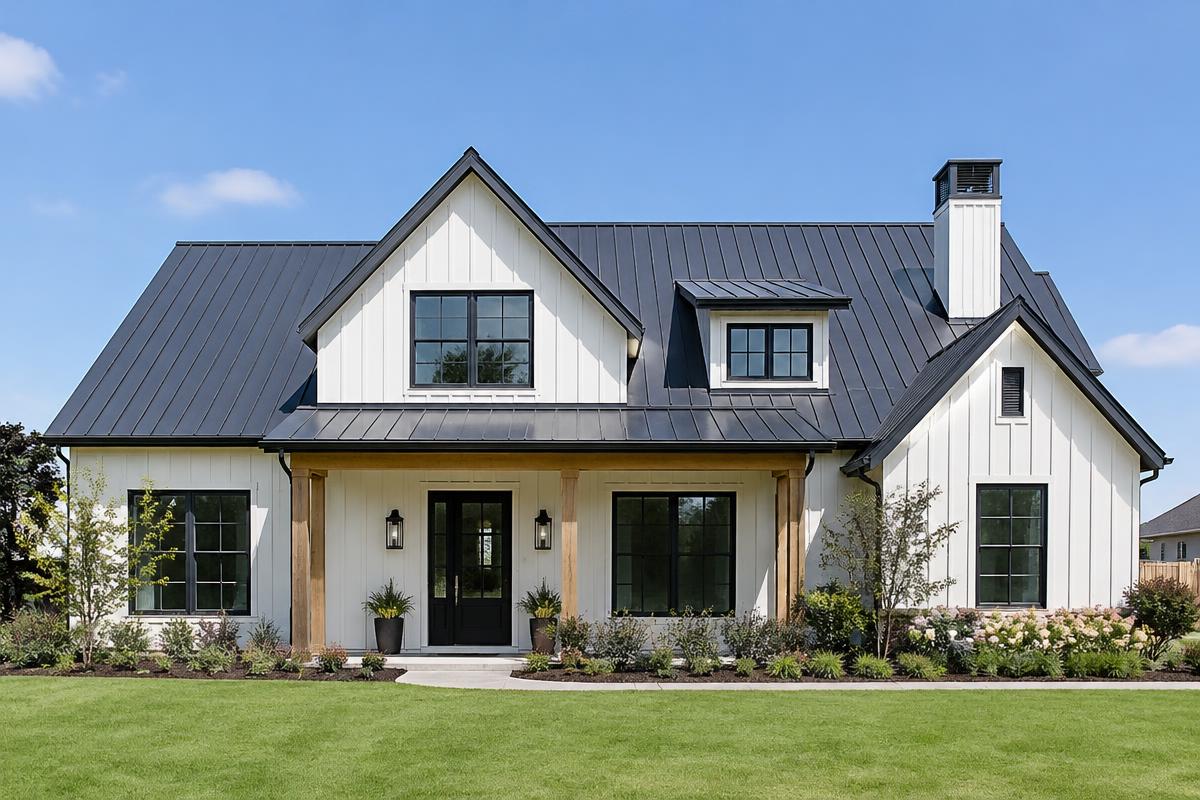
What makes a roof "standing seam"
The panels run vertically with raised seams that join them. Fasteners are concealed under the seams instead of driven through the face of the panel. That is the main difference from exposed-fastener metal.
Panel height, seam style and clip design vary by manufacturer. The clip system is what lets the metal expand and contract with temperature swings instead of working its fasteners loose.
How metal handles Texas heat and wind
Metal sheds water fast and does not rely on a sealant strip to hold tabs down. In a wind event, a standing seam system with the right clips and edge details can outperform a shingle roof. Reflective finishes and a ventilated air space can reduce heat gain; the finish and the assembly decide how much.
Metal is not silent. Rain and hail make more noise on metal than on asphalt unless the deck and underlayment are built to dampen it.
Panels, gauges and finishes
Residential standing seam comes in different panel profiles, metal types and gauges, with painted or stone-coated finishes. The right choice depends on your roof shape and the look you want. We confirm the exact panel, gauge and finish on the estimate rather than quoting "metal" generically.
What to confirm before you buy
Metal quotes vary a lot from one company to the next. Ask for these details in writing before you compare two bids.
- Panel profile, metal type, gauge and finish name
- Underlayment and eave protection as the system requires
- The clip and fastener system, and who makes it
- Flashing details at valleys, chimneys and walls
- The ventilation plan under the metal
- Warranty terms, including finish and wind coverage
When standing seam is not the fit
Complex rooflines with many hips, dormers and chimneys take more time and more cutting, which shows in the price. Some HOAs limit metal. And a structure that cannot carry the assembly, or a roof that needs a lot of framing work, may point you to another product.
The rest of the roof matters too
See Your Roof's Anatomy for how the layers work together, our LumaNail fastener guide for what holds the roof down, and our attic ventilation guide for intake and exhaust. Every material choice starts with a free Roof Protection Inspection and a written Roof Protection Damage Report.