
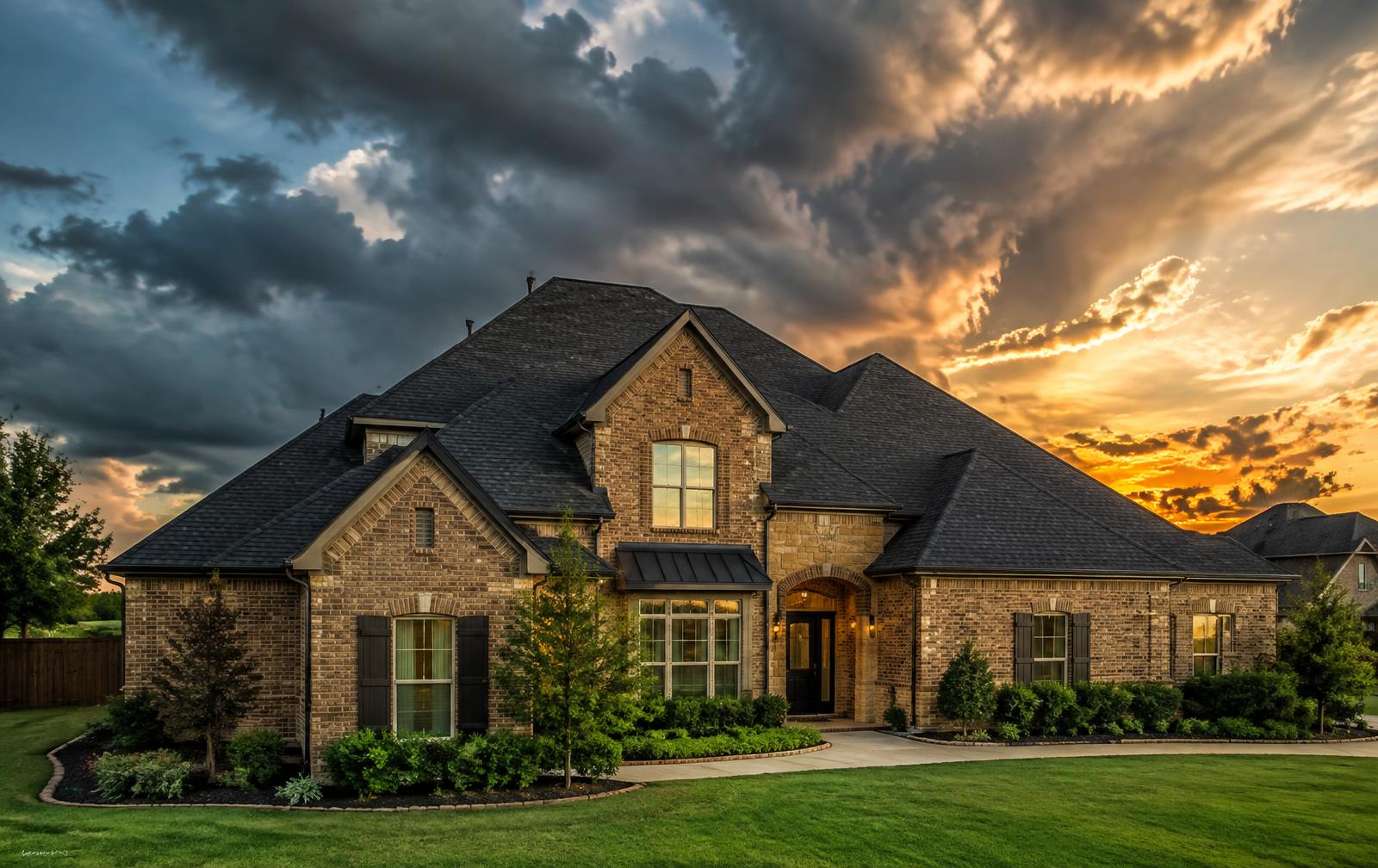
Impact class describes one kind of stress: a steel ball dropped on the shingle. It does not measure UV, wind-driven rain or attic heat.
How a shingle earns a Class 3 rating
Impact class comes from UL 2218, a test where a steel ball is dropped onto a shingle from a set height. Higher classes use a larger drop. Class 4 is the highest rating on the scale, and Class 3 sits just below it.
Which Owens Corning shingles are Class 3
Owens Corning lists these impact-rated lines at Class 3: Oakridge, TruDefinition Duration, TruDefinition Duration Designer. Availability and published ratings can change, so we confirm the product data sheet for the shingle that is actually quoted on your estimate.
What Class 3 does and does not do
The rating is useful, but it has clear edges. Here is what it covers and what it leaves to the rest of the roof.
- Resists hail impact better than unrated shingles
- Does not make the roof hail-proof
- Does not replace flashing, ventilation or careful installation
- Does not change what your insurer decides to cover
Insurance and the fine print
Some insurers offer a premium discount for impact-rated roofs, and the discount usually depends on the class and the carrier's rules. We do not set those rules. Ask your agent which rating your policy rewards and what proof they need.
When Class 3 makes sense
Class 3 is a common middle step: a real upgrade over unrated shingles, often at a lower material cost than Class 4, and in the architectural styles most HOAs approve. If your roof has taken repeated hail, compare it side by side with Class 4 before you choose.
The rest of the roof matters too
See Your Roof's Anatomy for how the layers work together, our LumaNail fastener guide for what holds the roof down, and our attic ventilation guide for intake and exhaust. Every material choice starts with a free Roof Protection Inspection and a written Roof Protection Damage Report.