
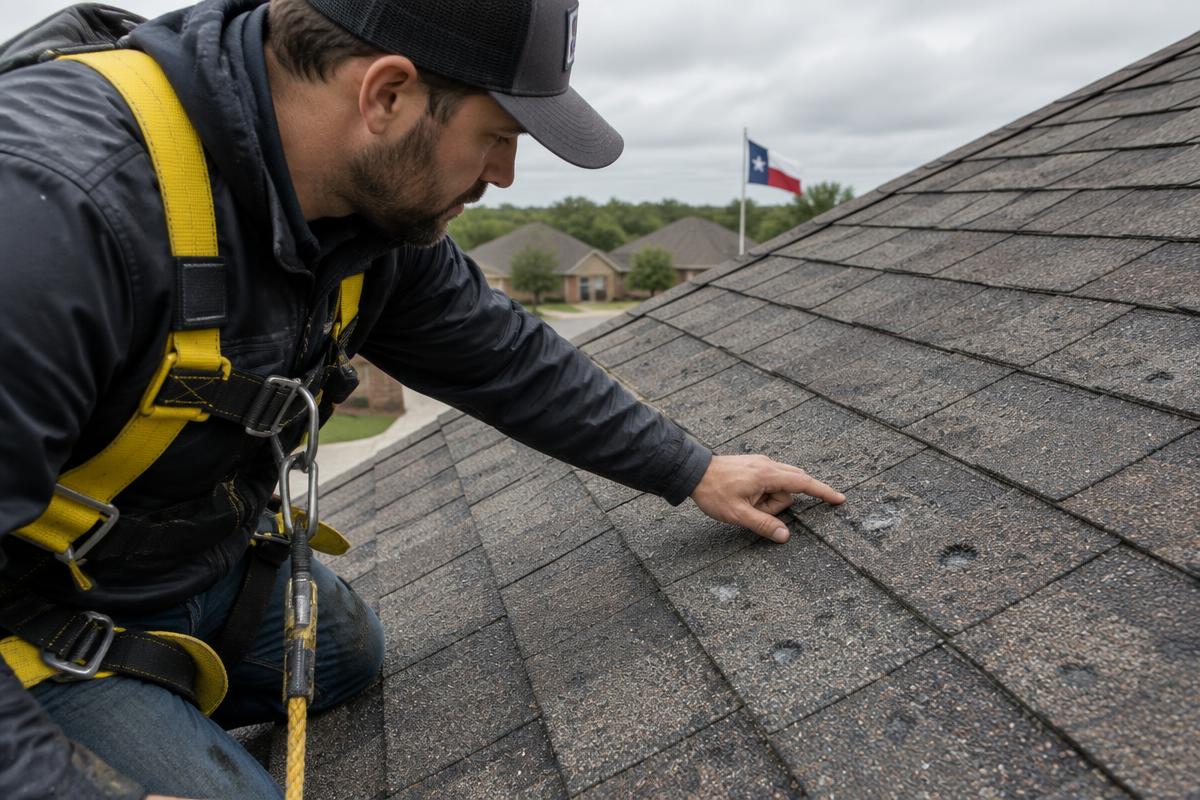
What wind can do to a shingle roof
Wind can lift a loose shingle, break its seal or bend it until a crease forms. A shingle may settle back down while damage remains. Missing pieces are easy to notice; lifted edges and broken seals often need a closer look.
A blow-off does not prove the whole roof failed. It also does not prove the rest is sound. Age, fastening, starter strips and the condition of nearby shingles all help explain why the damage happened.
We check more than the missing patch
We inspect nearby shingles, starter strips at the edges and visible flashing. Where accessible, we review nail placement and the condition of the wood that holds the nails. Putting a new shingle over a weak attachment point can leave the same problem in place.
- Missing shingles and exposed underlayment
- Creases, tears and broken seals
- Fasteners outside the required nailing zone
- Loose edge details and damaged flashing
When a shingle repair makes sense
A focused repair may work when damage is limited, compatible shingles are available and the surrounding roof can be opened without breaking more material. We follow the selected product's fastening and sealing instructions.
Older shingles may be brittle or hard to match. We explain color differences and repair limits before the job. An exact visual match is not always possible, especially when the original shingle has weathered or is no longer made.
When to compare repair with replacement
Many damaged slopes, repeated blow-offs or shingles that break during handling can make spot repairs less practical. We show the evidence and compare a repair scope with replacement options without treating every storm as a reason for a new roof.
For a replacement, the fasteners, starter, underlayment and ventilation all matter alongside the shingle. Impact resistance is not the same as a wind rating; compare the actual product documents for each option.
Keep the whole roof connected
See Your Roof's Anatomy to understand how the roof parts work together. Our LumaNail fastener guide explains the nails that hold the system in place. If a larger scope is needed, compare roof replacement and Owens Corning Class 3 and Class 4 models.