
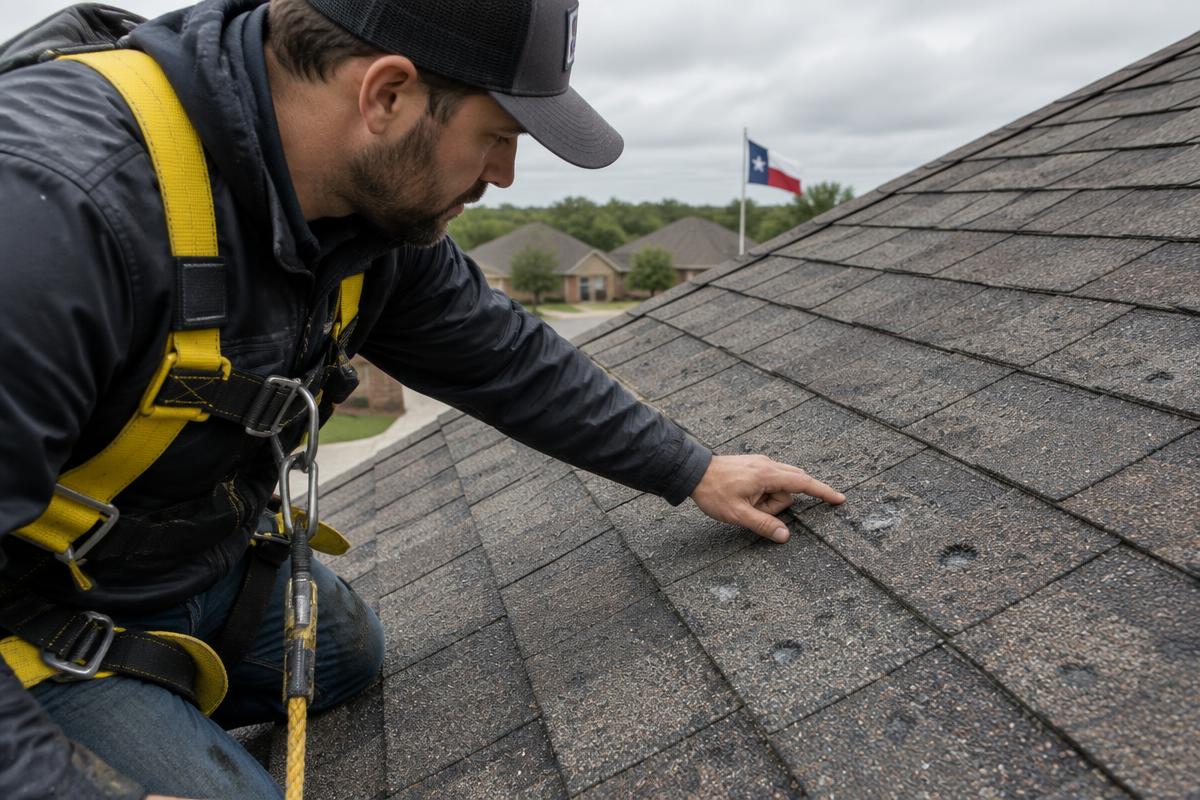
What to do when water is coming inside
Keep people away from wet electrical fixtures and a ceiling that is sagging or bulging. If there is an immediate danger, contact emergency services. Do not climb onto a wet roof or enter an unsafe attic.
If it is safe, move belongings away from the leak and catch drips in a container. Take photos from a safe place. Tell us when the leak started, where it shows indoors and whether you saw storm damage from the ground.
Emergency tarping is temporary protection
A tarp or temporary dry-in can help limit water entry while a permanent repair is planned. It is not a new roof and cannot promise to stop every leak in every storm. The roof shape, damage and weather affect what can be done safely.
We need safe access before getting on the roof. Lightning, strong winds and wet surfaces can delay roof work. We explain the practical next step rather than promise an arrival time or storm-time roof access.
Our after-hours emergency line
24/7 emergency line 469-689-0370 — $275 after-hours fee, free to diagnose for Roof Protection Members.
Calling for emergency help and booking a free inspection are different actions. Use the emergency number for an active after-hours concern. We discuss the conditions and the work needed before proceeding.
From a temporary cover to a lasting repair
Once it is safe, we check shingles, flashing, vents and visible decking. Water can travel along wood before dripping into a room, so we look beyond the indoor stain.
Your report separates visible damage from areas that still need investigation. A focused repair may be enough on a sound roof. Widespread damage may call for a replacement discussion. If you choose to contact your insurer, the insurer—not the roofer—decides coverage.
Keep the whole roof connected
See Your Roof's Anatomy to understand how the roof parts work together. Our LumaNail fastener guide explains the nails that hold the system in place. If a larger scope is needed, compare roof replacement and Owens Corning Class 3 and Class 4 models.