Check ownership and service before removal
Confirm with your satellite provider that the equipment is no longer needed and that you have permission to remove it. Some equipment may be owned by the provider or need to be returned. We do not cancel subscriptions or decide who owns the dish.
Tell us whether the dish serves your home, another unit or shared equipment. Our work concerns the roof-mounted hardware and roof repair; service disconnection and equipment return are separate matters.
Why the mount matters as much as the dish
A roof mount can leave fastener holes through shingles and underlying layers. Water may enter through those holes or damaged material around the base. Removing the dish while leaving a failing mount behind does not address that risk.
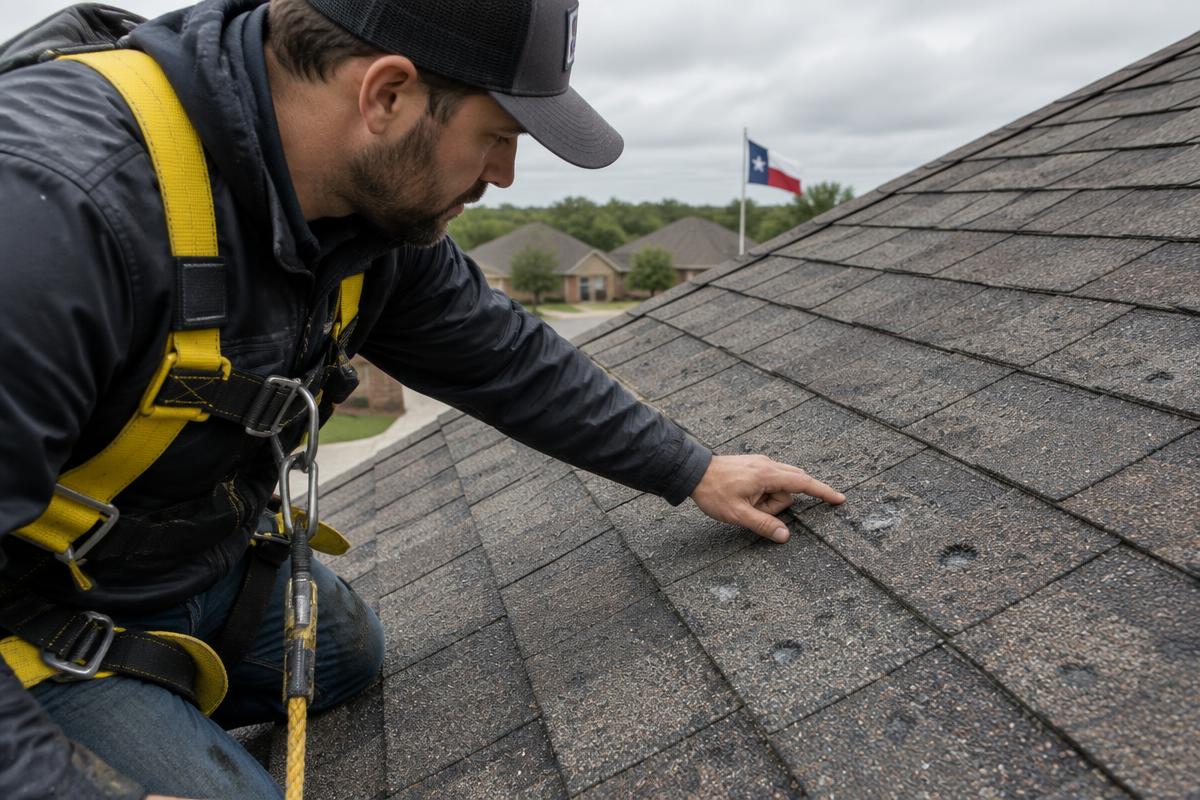
We inspect the mount location, surrounding shingles and accessible decking. A previous leak or repeated sealant patch may mean the repair extends beyond the footprint of the bracket.
What the roof restoration may include
After the removal is agreed, we assess how to restore the affected layers. The scope may include the mount, damaged shingles, underlayment and wood around the attachment points. The right approach depends on the roof material and its condition.
- Confirm which roof hardware is being removed
- Review fastener holes and nearby roof damage
- Explain material matching and repair limits
- Document the completed roof area with photos
Do not rely on a dab of caulk over every hole
A surface seal alone may not rebuild damaged roofing layers. We choose the repair detail based on the opening and the product instructions, not a blanket rule that every old mount can be sealed the same way.
If the roof is already being replaced, discuss unused equipment before the new layers go on. Removing it at that point may avoid another set of holes in your new roof.
Keep the whole roof connected
See Your Roof's Anatomy to understand how the roof parts work together. Our LumaNail fastener guide explains the nails that hold the system in place. If a larger scope is needed, compare roof replacement and Owens Corning Class 3 and Class 4 models.